Begin with the basis.
Pre-tender and PCSA review establish scope, assumptions, responsibility, requirements, systems and interfaces.
How ALM delivers
The work changes through tender, design, procurement and construction. The design basis, responsibility and evidence should remain traceable as it moves.
From appointment to completion
Pre-tender and PCSA review establish scope, assumptions, responsibility, requirements, systems and interfaces.
Technical design and Gateway 2 evidence bring together coordinated information, specialist submittals, comments and decisions.
Procurement, construction support, queries, inspections and controlled change lead into Gateway 3 evidence, final records and close-out.
Design development
At Ward 26, the area study brings the staircase enclosure, rainscreen, openings and surrounding structure into one coordinated view—so the design can be tested, refined and carried into technical delivery.
Explore the Ward 26 design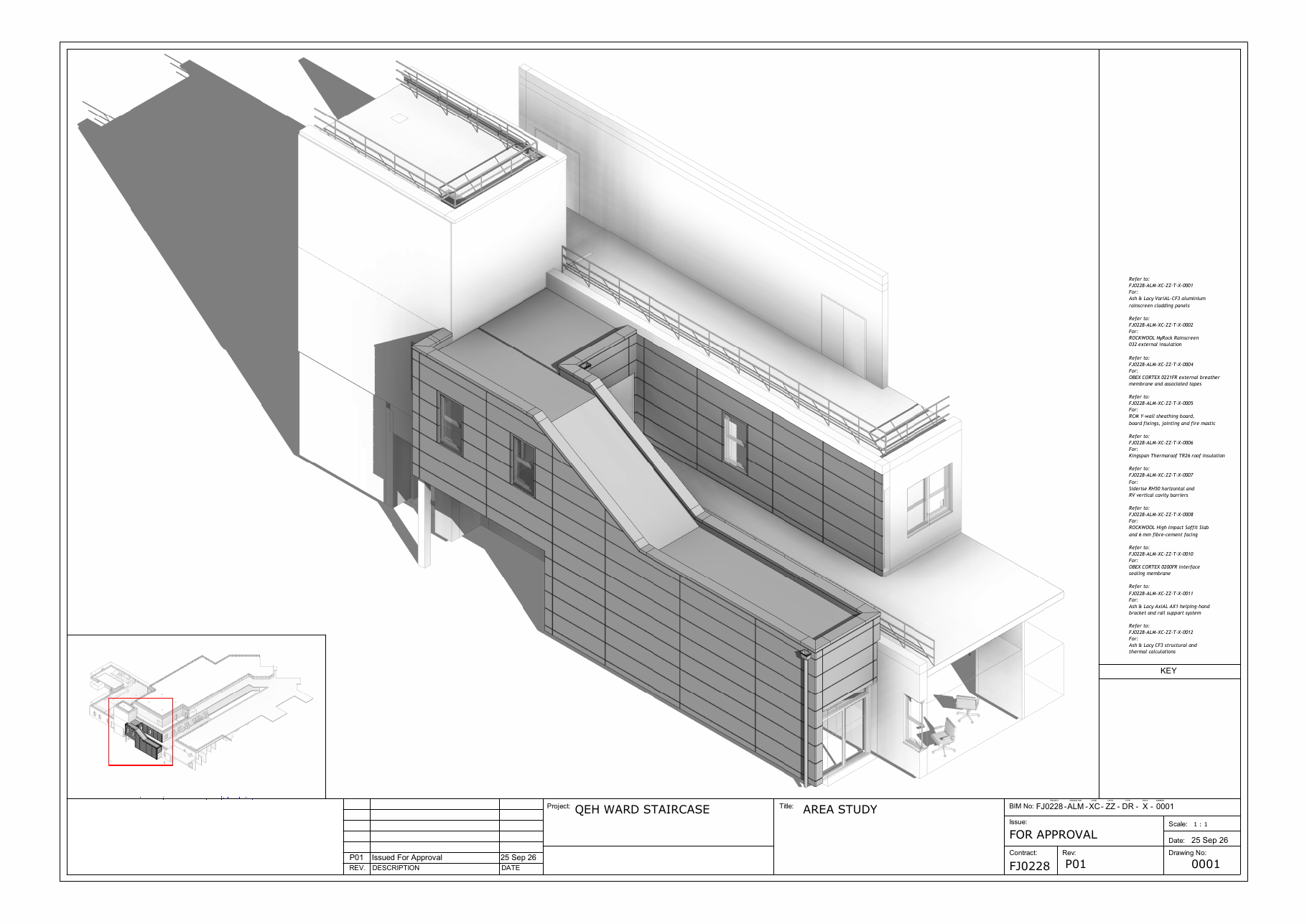
What must stay intact
Scope, exclusions and responsibilities stay visible as the technical package develops.
Systems, interfaces, calculations and specialist inputs are brought into one reviewable route.
Queries, changes, inspections and completion evidence remain tied back to the current design.
Need a clearer route through the envelope package?